
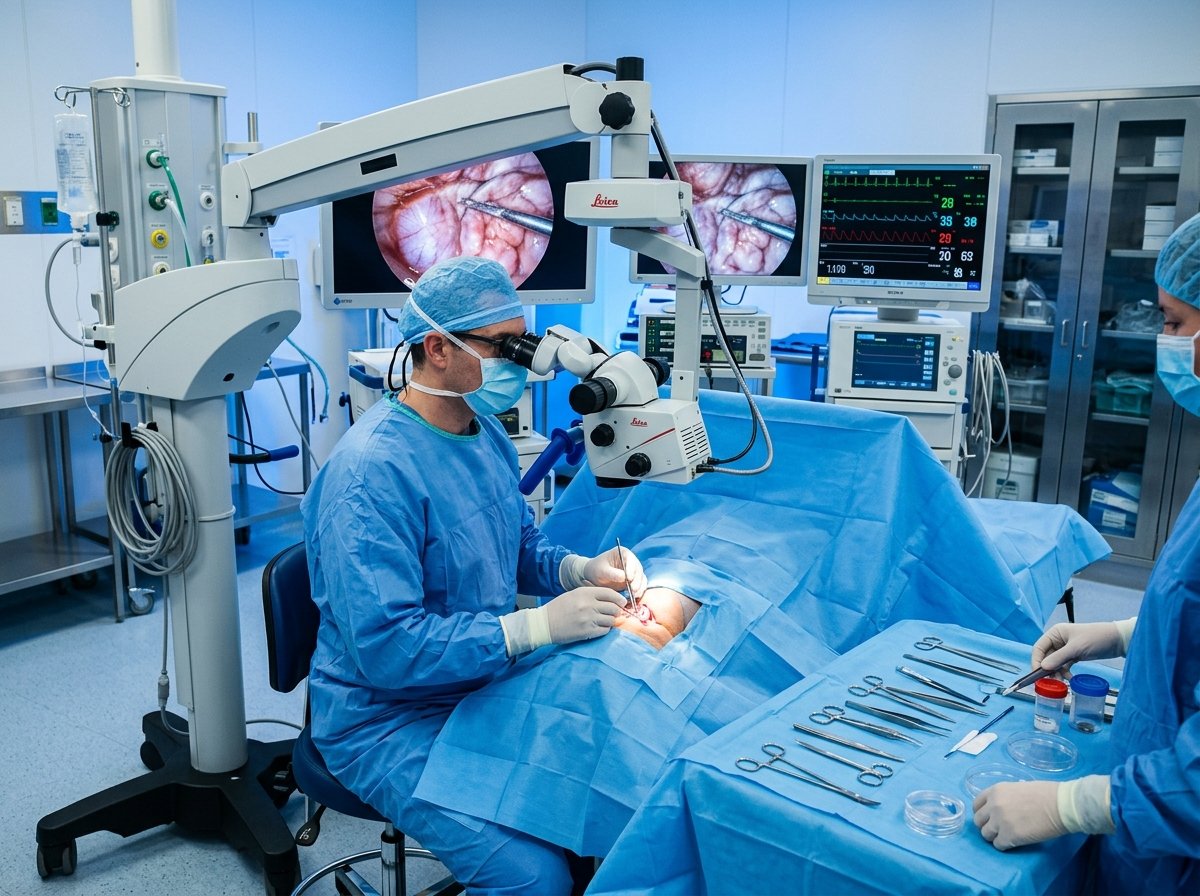
What is Laparoscopy & Hysteroscopy?
Laparoscopy and Hysteroscopy are minimally invasive endoscopic procedures used to identify and simultaneously correct anatomical conditions affecting the uterus, fallopian tubes, ovaries, and pelvic cavity that contribute to infertility.
By combining high-definition visualization with microscopic surgical instruments, our fertility surgeons can diagnose and repair structural issues in a single day-care procedure with minimal downtime.
The Two Key Modalities
Laparoscopy (Pelvic & Abdominal Examination)
Laparoscopy involves making 2–3 tiny (5–10mm) incisions in the abdomen and inserting a specialized fiber-optic camera (laparoscope) to view the exterior of the uterus, ovaries, and fallopian tubes.
- Endometriosis: Excision or ablation of endometrial tissue causing pelvic inflammation and pain.
- Blocked or Damaged Fallopian Tubes: Fimbrioplasty, adhesiolysis, and chromopertubation testing.
- Pelvic Adhesions: Gentle release of scar tissue caused by previous infections or surgeries.
- Ovarian Cysts & Endometriomas: Precision cystectomy preserving healthy ovarian reserve.
- Uterine Fibroids (Myomectomy): Removal of subserosal and intramural fibroids distorting anatomy.
Hysteroscopy (Uterine Cavity Examination)
Hysteroscopy uses a narrow, illuminated telescope passed gently through the natural opening of the vagina and cervix directly into the uterine cavity — requiring no abdominal incisions.
- Uterine Polyps (Polypectomy): Removing benign growths from the endometrium that hinder embryo implantation.
- Submucosal Fibroids (Myomectomy): Resecting fibroids projecting into the uterine cavity.
- Intrauterine Adhesions (Asherman's Syndrome): Releasing scar bands inside the uterus to restore regular menses.
- Uterine Septum Resection: Correcting congenital uterine division to prevent recurrent miscarriages.
- Chronic Endometritis Evaluation: Assessing endometrial lining health and tissue biopsy.
How It May Help Fertility
Identifying and surgically repairing anatomical barriers often significantly enhances the likelihood of natural pregnancy, as well as optimizing the uterine environment for subsequent IUI or IVF embryo implantation.
Minimally Invasive
Keyhole incisions mean minimal blood loss, minimal scarring, and drastically reduced infection risks.
Gentle TechniqueDirect HD View
Magnified high-definition camera provides unmatched visual clarity of delicate reproductive organs.
Precise DiagnosisOne-Step Treatment
Diagnosis and corrective therapy (adhesiolysis, cyst removal, polyp resection) performed in the same session.
Simultaneous RepairFast Recovery
Performed as a day-care procedure; patients return home the same evening and resume normal life in 48–72 hours.
Day-Care StayWhen Is It Recommended?
- Unexplained infertility where standard non-invasive tests show normal results.
- Suspected endometriosis or severe chronic pelvic pain/dysmenorrhea.
- Abnormal findings on pelvic ultrasound, MRI, or HSG test.
- Recurrent IVF implantation failures or recurrent pregnancy loss.
- Suspected tubal blockage, hydrosalpinx, or pelvic adhesions.